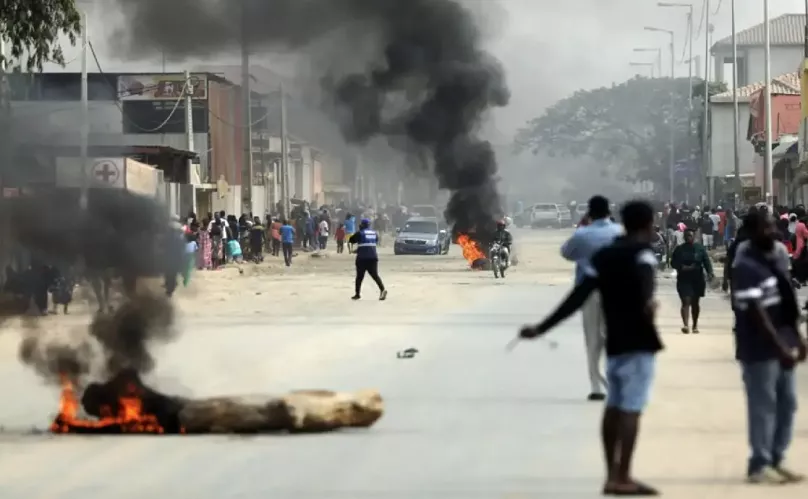

Luanda, Angola – July 2025
The death toll from ongoing petrol price protests in Angola has climbed to at least 23, with dozens more injured, as hospitals in major cities report being overwhelmed by casualties and shortages in medical supplies.
Protests erupted earlier this month after the Angolan government lifted fuel subsidies, resulting in a sharp spike in the cost of petrol, diesel, and public transportation — disproportionately affecting low-income communities.
Demonstrations quickly spread across Luanda, Huambo, Benguela, and Cabinda, with thousands of citizens taking to the streets, chanting slogans against what they call “economic betrayal” by President João Lourenço’s administration.
“We can’t eat, we can’t move, and now we’re being shot at,” said Carlos Mateus, a 27-year-old protester who was injured during a police crackdown in Luanda’s Cazenga district.
Medical workers are calling the situation a national emergency, with clinics running low on trauma supplies and blood.
“We’re treating gunshot wounds on the floor,” said Dr. Lúcia Fernandes, a trauma surgeon at a public hospital in Huambo. “We’ve had to send patients home untreated because we don’t have beds or medication.”
Eyewitnesses and rights groups report that live ammunition and tear gas were used against protesters in multiple cities. Amnesty International and Human Rights Watch have called for an independent investigation into the use of force by police and military units.
The government has defended its actions, stating that the subsidy removal was necessary to stabilize the economy and reduce debt.
“These protests are being manipulated by foreign-funded agitators,” said Interior Minister Eugénio Laborinho, who denied any state involvement in protester deaths.
Angola, one of Africa’s largest oil producers, has long subsidized fuel as a tool for social stability. But with oil prices fluctuating and IMF loan conditions tightening, the government is under pressure to implement austerity measures.
Analysts say this moment could be politically explosive for the MPLA ruling party, especially ahead of municipal elections in 2026.
“You can’t impose fiscal reforms on an empty stomach,” says Dr. Belina Simao, an economist at the University of Luanda. “This is a social time bomb.”
Civil society groups are demanding the reinstatement of subsidies or the introduction of targeted cash transfers to cushion the poor, as well as a full accounting of protest casualties.
As anger mounts and hospitals overflow, the country now faces a dangerous crossroads: one between economic necessity and social justice.