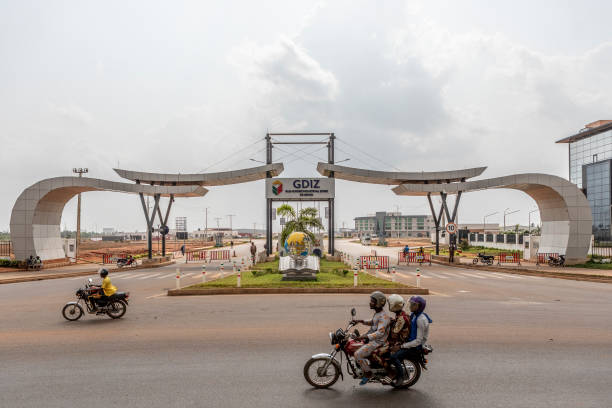

Cotonou / Glo-Djigbé – July 2025
In a bold departure from Africa’s decades-long reliance on raw commodity exports, Benin is reshaping its economic future by investing in local processing and industrialisation. At the heart of this transformation is the Glo-Djigbé Industrial Zone (GDIZ) — a state-backed, special economic area just 45 minutes from Cotonou.
Here, cotton and cashew nuts — Benin’s two leading agricultural exports — are no longer shipped out raw, but instead processed, packaged, and exported as finished goods.
“This isn’t just about exports,” said Romuald Wadagni, Benin’s Minister of Economy and Finance. “It’s about jobs, skills, and national pride.”
In 2024, GDIZ hosted over 35 companies across agro-processing, textiles, and manufacturing. It directly created more than 15,000 jobs, with projections of 40,000 by 2026.
Benin is now the leading cashew nut processor in West Africa, and its cotton sector is seeing a boom in local spinning and textile production.
“Before, we sent our cotton to Asia. Now, we make t-shirts here,” said Aline Toko, a textile worker in the zone. “And my children have school because of this job.”
The GDIZ is a public-private partnership between the Beninese government and Arise Integrated Industrial Platforms, which also manages similar zones in Gabon and Togo.
Its strategic goals include: – Reducing raw exports – Increasing local value-addition – Attracting foreign and regional investment – Boosting youth employment and upskilling
International observers have praised GDIZ as a model for industrialisation without heavy debt, especially in an era of global supply chain realignment.
However, challenges remain. Infrastructure bottlenecks, energy reliability, and the need for skilled labour continue to test the zone’s long-term sustainability.
Benin’s President Patrice Talon, himself a former cotton magnate, has made agro-industrialisation central to his economic vision. His administration aims to turn the country into a regional hub for light manufacturing and agribusiness innovation.
“Glo-Djigbé is not just a factory park — it’s a symbol of Africa producing for itself,” said Moussa Abalo, an economist with the ECOWAS Business Council.
With Africa’s youth population soaring and demand for jobs rising, Benin’s industrial shift could offer a scalable roadmap for other commodity-dependent nations.