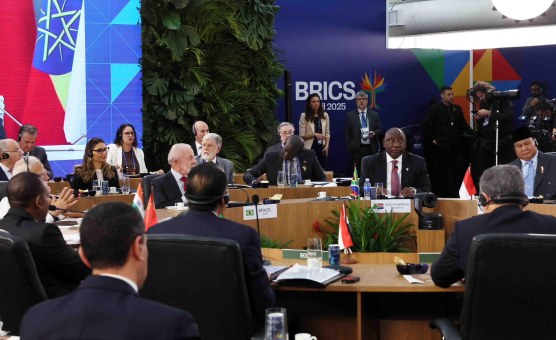

Durban, South Africa – July 2025
The 2025 BRICS Summit concluded this week with a renewed global spotlight on Africa’s strategic importance, as African leaders and observers called for greater inclusion in the bloc’s decision-making processes and financial institutions.
Held in Durban, South Africa—the only African nation among the five-member bloc—the summit drew heads of state, economists, and civil society leaders from across the Global South. This year's theme, “Unity in Diversity: Charting a New Economic Order”, emphasized multilateral cooperation and rebalancing global influence.
While the summit showcased expanded cooperation between Brazil, Russia, India, China, and South Africa, it was clear that a growing number of African voices are pushing for more direct engagement—not just symbolic participation.
“Africa must not remain a junior partner in this evolving multipolar world,” said Senegalese President Amadou Diouf, who was invited as an observer. “We bring resources, labor, and ideas. We want equal footing.”
Several policy papers presented at the summit highlighted the need for: – Establishing an African Development Window within the BRICS New Development Bank (NDB) – Promoting intra-African trade through BRICS partnerships – Creating a permanent consultative seat for the African Union at BRICS forums
Critics argue that despite progressive rhetoric, BRICS institutions remain dominated by the original five members, especially China and India, with limited financial access or voting power for other Global South nations.
South African President Naledi Molefe, who chaired this year’s summit, acknowledged the concerns and committed to “championing a path forward where BRICS becomes a true platform for all of the Global South, with Africa at the center.”
On the economic front, BRICS announced plans to launch a BRICS Digital Payment System, aimed at reducing reliance on Western-controlled banking networks and boosting local currencies in trade. African countries expressed interest in early adoption if given fair access.
Civil society groups also voiced support for Africa's deeper integration. “This is a unique moment for Africa to define its geopolitical agency,” said Dr. Nana Asare of the African Global Futures Institute. “If BRICS wants credibility, it must listen to Africa—not just host summits on its soil.”
The summit ended with a joint communiqué calling for reforms in global financial governance, enhanced South-South cooperation, and a new task force to explore African expansion mechanisms within BRICS.
As BRICS charts its next chapter, the question remains: Will Africa be a true partner—or just a guest at the table?