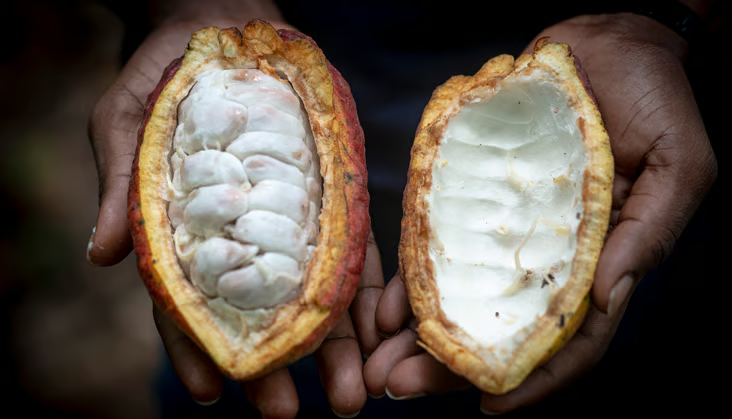

Abidjan, Accra, Yaoundé – July 2025
Global cocoa prices have surged to a 40-year high in 2025, triggering both optimism and anxiety across West Africa—home to over 70% of the world’s cocoa production.
Côte d’Ivoire, Ghana, and Cameroon are at the heart of the boom. But as billions flow into the cocoa industry, a critical question emerges: who is really benefiting from the price spike?
Côte d’Ivoire, the world’s largest cocoa producer, has increased its farmgate price by over 40%, giving farmers short-term relief. The government has also announced new subsidies for fertilizer and equipment, aiming to stabilize yields in the face of erratic rainfall.
Yet many Ivorian farmers remain cautious. “The price is better, yes,” said Koffi N’Guessan, a farmer in the Daloa region. “But our costs have gone up too—transport, inputs, everything.”
Ghana, the second-largest producer, has aggressively marketed its cocoa through the Ghana Cocoa Board (COCOBOD), securing forward contracts with premium buyers. The country is also pushing for more domestic chocolate manufacturing to capture value locally.
“We cannot remain just raw exporters,” said Ghana’s Agriculture Minister, Nana Kwame Dapaah. “High prices give us leverage, but only if we invest wisely.”
Cameroon, though smaller in volume, is emerging as a quiet winner. With more flexible trade policies and increasing investment from private processors, the country is rapidly expanding its footprint in the regional market.
“Cameroon is positioning itself as a processing hub,” said analyst Clarisse Tchana. “They may not produce as much as Ghana or Côte d’Ivoire, but their margins could be higher in the long term.”
Despite the price rally, challenges persist: – Child labor remains a concern in some rural areas – Climate change threatens future harvests – Most farmers still live below the poverty line
Experts say unless structural reforms are made—such as investing in cooperatives, enforcing ethical sourcing, and supporting local chocolate industries—the high prices may not translate into long-term prosperity.
Meanwhile, multinational buyers are raising prices on luxury chocolate products, passing costs to consumers while maintaining profits.
For now, West Africa is cashing in. But sustainable wealth from cocoa will depend not just on price—but on policy, equity, and vision.