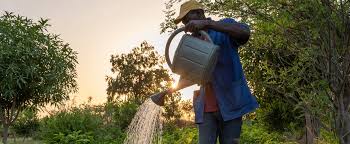

Niamey, Niger – July 2025
Against the odds of desertification and climate stress, an ambitious new project is sowing seeds of change in the Sahel — using forest gardens to restore soil, grow food sustainably, and provide local income.
The initiative, launched by the nonprofit Trees for the Future (TREES) and local Sahelian partners, seeks to bring the successful forest garden model — already thriving in parts of East and Central Africa — to drought-prone regions like Niger, Mali, Burkina Faso, and northern Nigeria.
A forest garden combines trees, shrubs, vegetables, grains, and medicinal plants in dense, multi-layered plots designed to mimic natural ecosystems.
“The goal is to regreen the Sahel from the ground up,” says Fatoumata Diallo, project lead for TREES in Niger. “It’s climate adaptation, food production, and land healing all in one.”
In an area where temperatures soar, rains are erratic, and soil is depleted, forest gardens offer an alternative to slash-and-burn agriculture and aid dependence.
The pilot sites, which began in 2024, are already showing promise. In just one year, over 200 farmers in Tillabéri and Dosso regions have planted more than 300,000 trees, including moringa, neem, papaya, and acacia, alongside beans, millet, and tomatoes.
“Before this, nothing grew on my land,” says Abdoul Karim, a farmer near Dosso. “Now I feed my family from what I grow — and even sell in the market.”
The forest garden model also includes training in composting, seed saving, natural pest control, and sustainable water usage.
Still, the expansion faces challenges:
Water access remains a barrier in parts of the Sahel
Some communities are hesitant to embrace unfamiliar growing methods
Long-term support and monitoring are needed to avoid project abandonment
However, regional governments — including Niger’s Ministry of Environment — have expressed support for forest gardens as part of broader Great Green Wall ambitions.
Experts say that if scaled properly, forest gardens could help reclaim degraded land, reduce migration linked to food insecurity, and empower women and youth in farming communities.
“This is the future of farming in climate-stressed Africa,” says agroecologist Dr. Ibrahim Ndour. “It’s low-tech, high-impact — and rooted in resilience.”
With funding from African Union climate programs, international donors, and local cooperatives, the project aims to reach 1 million trees and 10,000 farmers across the Sahel by 2027.
As rows of young trees sway under the Sahel sun, the message is clear: hope can grow — even in dry land.