
Tamale / Ouagadougou – July 2025
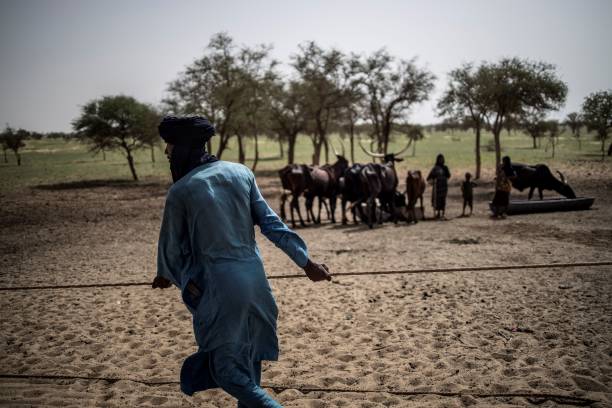
Beneath the bustle of northern Ghana’s livestock markets lies a dark, complex trade that experts say has made the country the “nerve centre” of a vast stolen cattle network — one that is helping fund deadly militia groups across the Sahel.
A joint investigation by West African security analysts and livestock trade monitors has revealed that thousands of stolen cattle, originally looted from conflict zones in Burkina Faso, Mali, and Niger, are being smuggled into Ghana, where they are sold or laundered through legitimate markets.
The profits, in many cases, are believed to be funneled back to violent extremist groups like Jama’at Nusrat al-Islam wal-Muslimin (JNIM) and Islamic State in the Greater Sahara (ISGS), who are expanding their influence across the Sahel region.
“Cattle is the new currency of war,” says Aisha Mahama, a border security expert based in Bolgatanga. “It’s low-risk, high-profit, and completely overlooked in the fight against terrorism financing.”
Ghana’s porous northern borders, combined with under-resourced enforcement and deep cultural ties across pastoralist communities, have made the country a prime corridor for this illicit livestock economy.
According to recent data from the Sahel Livestock Initiative, over 18,000 cattle suspected of being stolen crossed into Ghana in the first half of 2025 alone.
Once inside, cattle are sold at major livestock markets in Tamale, Bawku, and Techiman, with falsified origin papers or simply under the radar of overstretched veterinary officers and revenue authorities.
Traders, many of whom are unaware of the criminal networks behind the livestock, say the system has become normalized.
“If a cow is healthy and the buyer is willing, no one asks where it came from,” said Issa Fuseini, a cattle dealer in the Tamale market.
The Ghanaian government has acknowledged the problem but says it faces challenges distinguishing legitimate transhumance from illicit flows, especially as cattle continue to move across ECOWAS-approved regional trade routes.
Law enforcement agencies are now working with INTERPOL and regional anti-terror task forces to trace funds and improve cattle traceability through microchipping and digital tagging — a project still in pilot phase.
Analysts warn that ignoring this issue could further entrench the financing capabilities of armed groups, who already rely on illicit gold, kidnappings, and arms smuggling to fund their operations.
“We’ve focused on weapons and fighters, but not on the everyday economies that keep these groups alive,” said Dr. Pascal Yaro, a Sahelian political economy expert.
Calls are growing for a regional cattle tracing system, stronger enforcement at Ghana’s borders, and greater awareness among livestock traders and buyers.
“Ghana’s centrality in this trade is not just a national problem,” Mahama adds. “It’s a regional security threat hiding in plain sight.”