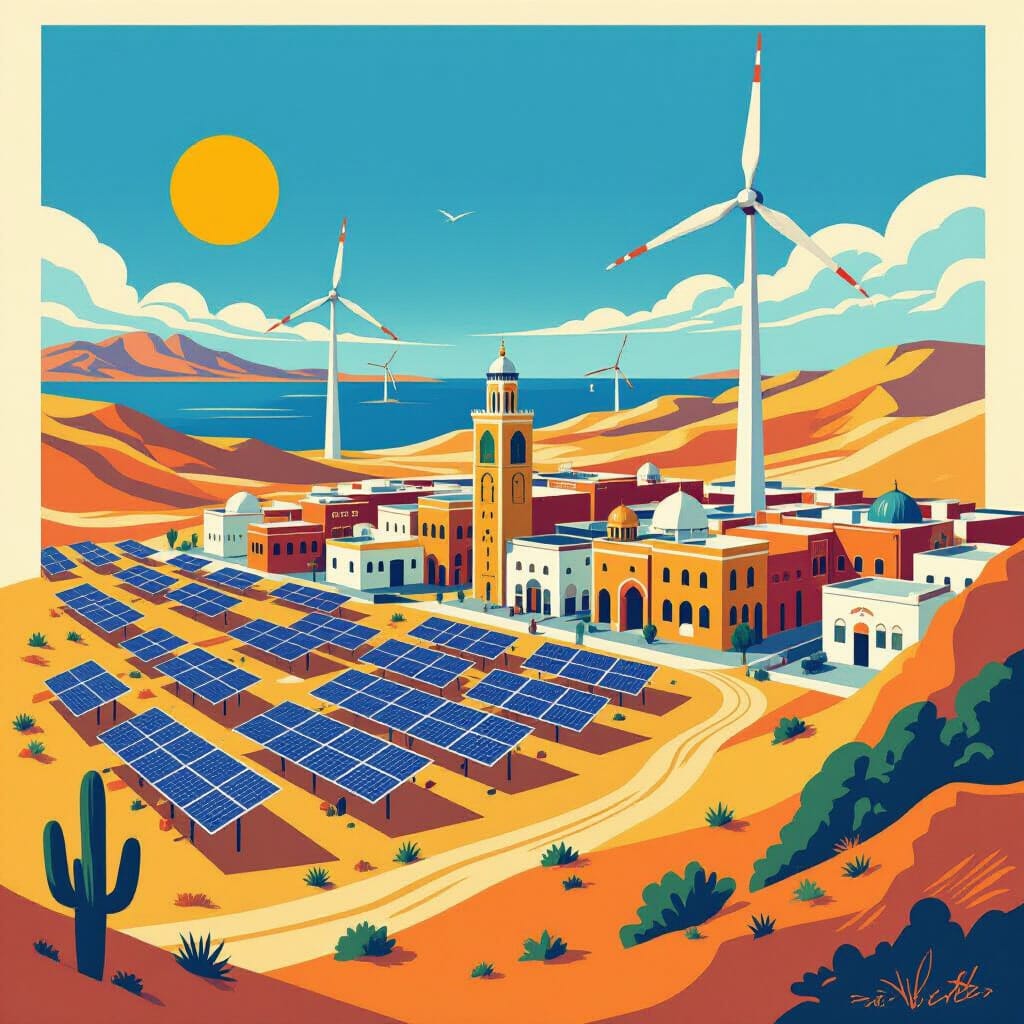

Morocco has reaffirmed its climate leadership by announcing a firm 2040 target to phase out all coal-fired power plants, aligning with its updated Nationally Determined Contribution (NDC) under the Paris Agreement. The move positions Morocco among the first African nations to establish a concrete coal exit strategy, signaling a major shift toward renewable energy and low-carbon growth.
The North African nation already sources over 40% of its electricity from renewable energy, primarily solar and wind. With the new policy, officials say Morocco aims to exceed 70% renewable generation by 2040, supported by large-scale solar projects like Noor Ouarzazate, one of the largest concentrated solar plants in the world.
“Our energy future is green — not only for sustainability but for sovereignty,” said Leila Benali, Morocco’s Minister of Energy Transition and Sustainable Development. “By phasing out coal, we are investing in the resilience of future generations.”
Meanwhile, in South Africa, cultural and climate agendas converged as the country hosted a G20 Culture Working Group session in Pretoria, focusing on how heritage, storytelling, and creative industries can accelerate environmental awareness. The meeting explored how art, music, and indigenous knowledge systems can be woven into global climate policy.
“Culture is a bridge between humanity and nature,” said Nathi Mthethwa, South Africa’s delegate to the G20 cultural forum. “The creative sector must play a central role in shaping the green transition narrative across Africa.”
Analysts say these two developments — Morocco’s energy transition and South Africa’s cultural diplomacy — highlight Africa’s emerging dual leadership in technological innovation and cultural influence within global climate conversations.
Both nations have positioned themselves as champions of sustainable development that integrates economic reform, artistic expression, and community inclusion. While Morocco focuses on infrastructure and energy reform, South Africa is emphasizing the cultural dimensions of climate adaptation — a vital yet often overlooked element of sustainability.
If fully implemented, Morocco’s coal phase-out will reduce annual emissions by tens of millions of tons and could serve as a model for climate-aligned economic diversification across Africa. The G20 culture talks, on the other hand, may redefine how nations incorporate cultural identity into the global sustainability discourse.
Together, these milestones mark an important moment for Africa’s voice in shaping a just and inclusive energy transition — where technology, culture, and climate policy meet.