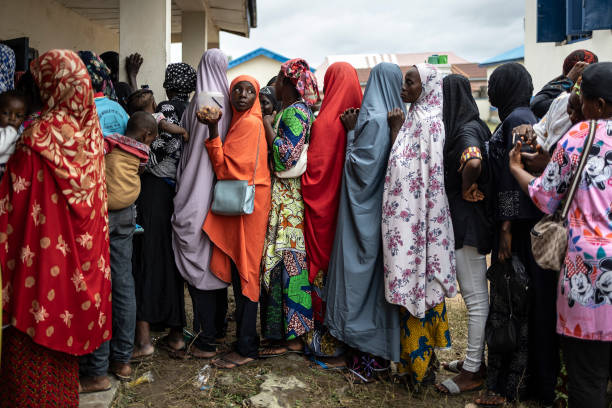

Maiduguri, Nigeria – July 2025
The United Nations has issued a stark warning that drastic cuts to humanitarian funding in northeast Nigeria are threatening to unravel years of progress in the fight against violent extremism — and could lead to a surge in Boko Haram and ISWAP recruitment among desperate civilians.
Speaking in Abuja, the UN’s humanitarian coordinator for Nigeria, Mohamed Fall, said that aid operations in the northeast are now severely underfunded, forcing agencies to slash food support, education programs, and reintegration efforts for internally displaced people (IDPs).
“When people are hungry, homeless, and hopeless — they become easy targets for extremist groups,” Fall warned. “Cutting aid is not just a financial decision. It’s a security risk.”
The affected areas — particularly Borno, Yobe, and Adamawa States — have faced over a decade of violence from Boko Haram and its splinter faction, the Islamic State in West Africa Province (ISWAP).
Over 2.3 million people remain displaced, and nearly 4.4 million are in urgent need of food and basic assistance, according to the UN Office for the Coordination of Humanitarian Affairs (OCHA).
Many aid programs, including those run by WFP, UNICEF, and ICRC, are now scaling back operations due to reduced international donor support, even as the rainy season threatens to worsen access and malnutrition rates.
Local security analysts say militant groups are already exploiting the vacuum.
“We’ve received intelligence that Boko Haram factions are offering food and protection in return for allegiance,” said one senior Nigerian army officer in Maiduguri, speaking anonymously.
Civilians in displacement camps are feeling the impact. In Gwoza, near the Cameroon border, Fatima Abubakar, a mother of five, said her food ration was halved last month. “We don’t have enough to survive. Some have already gone back to the bush to join [militants].”
The Nigerian government has urged donors not to abandon humanitarian commitments and says it is working on alternative social safety nets, though critics argue that current efforts are underfunded and poorly coordinated.
Human rights groups warn that failing to act now could reverse peacebuilding progress and risk igniting a new wave of violence and mass displacement.
The UN is calling for at least $800 million in emergency funding to prevent further deterioration of the humanitarian situation in northeast Nigeria.
“Peace and stability are not possible without food, shelter, and dignity,” Fall said. “We must not let these communities fall off the radar.”