
Johannesburg / Washington D.C. – July 2025
South African President Cyril Ramaphosa has sharply condemned the United States’ decision to impose a 30% blanket tariff on a wide range of South African exports, calling it “economically aggressive and diplomatically short-sighted.”
The tariffs, reintroduced under President Donald Trump’s second term, apply to key South African exports including steel, citrus, wine, automotive parts, and mineral commodities.
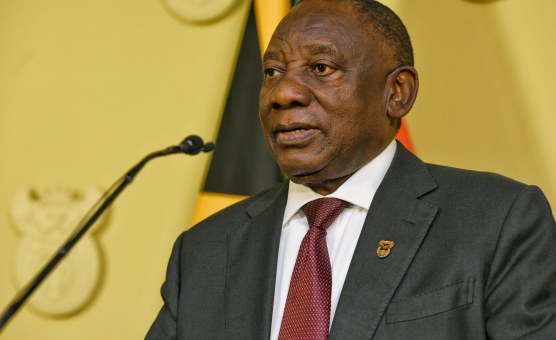
Speaking at a press briefing in Pretoria, Ramaphosa stated:
“This move by the United States threatens thousands of South African jobs and undermines decades of bilateral economic cooperation. It is an affront to the principles of mutual respect and fair trade.”
Trade experts warn that the tariffs could cost South Africa over $1.4 billion annually in lost exports, hitting industries that support tens of thousands of workers and SMEs.
The South African Department of Trade, Industry and Competition (DTIC) has already begun consultations with other BRICS nations, the African Union, and the World Trade Organization (WTO) to coordinate a diplomatic and legal response.
Meanwhile, public opinion in South Africa has been sharply critical of the U.S. decision, with calls to reassess the AGOA trade agreement and accelerate trade realignment toward emerging markets like China, India, and Brazil.
Former finance minister Tito Mboweni commented, “This is why we must build intra-African trade resilience. We cannot depend on any single partner—especially one acting unpredictably.”
The U.S. Embassy in Pretoria issued a short statement defending the move as part of Trump’s “America First” economic policy, aimed at protecting U.S. jobs and industries.
However, critics argue that the tariffs are more political than economic, coming just months before a key U.S. election cycle.
As diplomatic tensions rise, South Africa is preparing to launch an official complaint at the WTO and may consider reciprocal trade restrictions.
Ramaphosa concluded, “South Africa will not be bullied. We will defend our industries, our workers, and our sovereignty—through law, partnership, and principle.”