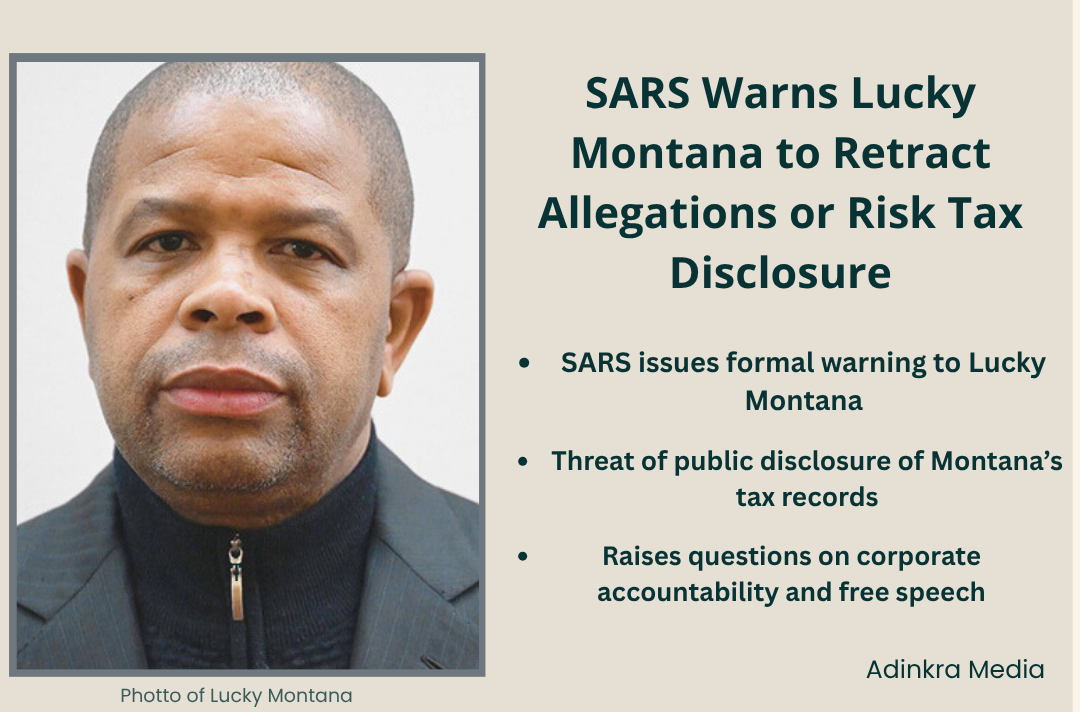

The South African Revenue Service (SARS) has issued a formal warning to business executive Lucky Montana, instructing him to withdraw claims he previously made or face the publication of his tax information. The move signals a rare and assertive action by the tax authority in response to public allegations concerning its operations and leadership.
The Warning
SARS stated that the claims made by Montana, who is widely known as a prominent business figure, are unsubstantiated and potentially damaging to the agency’s reputation. The letter from SARS highlights that, should Montana fail to retract his statements, the authority may publicly disclose details of his tax compliance as permitted under South African law.
The warning underscores SARS’ authority to protect the integrity of its operations and serves as a reminder that tax-related allegations can carry serious consequences for individuals in the public eye.
Lucky Montana’s Position
While Montana has not yet formally responded to the warning, his prior claims included allegations of mismanagement and selective enforcement within SARS. Analysts say this confrontation places both the executive and the agency under intense scrutiny, as the public and business sectors watch closely how the situation unfolds.
Implications for Business and Governance
The tax warning raises broader questions about corporate accountability and the role of SARS in enforcing compliance. South Africa’s business community is known to follow such disputes closely, particularly when high-profile executives are involved.
Experts note that the action by SARS could set a precedent for handling false or damaging statements by business leaders against public institutions. At the same time, transparency advocates are calling for clear communication to ensure the public understands both parties’ positions.
Legal and Public Reaction
Legal experts suggest that Montana could face serious consequences if he ignores the warning, ranging from financial penalties to formal disclosure of tax records. Meanwhile, public debate is emerging on the balance between free speech and responsibility when making claims about public institutions.
Observers also emphasize that this incident may affect trust in both SARS and South Africa’s business leaders, depending on how each side manages public messaging.
Looking Ahead
As this situation develops, attention will focus on whether Lucky Montana retracts his claims, how SARS proceeds with its threat, and what this could mean for the relationship between high-profile business figures and government agencies.
The next steps are expected to influence both public perception of SARS’ authority and the standards of accountability in South Africa’s corporate landscape.