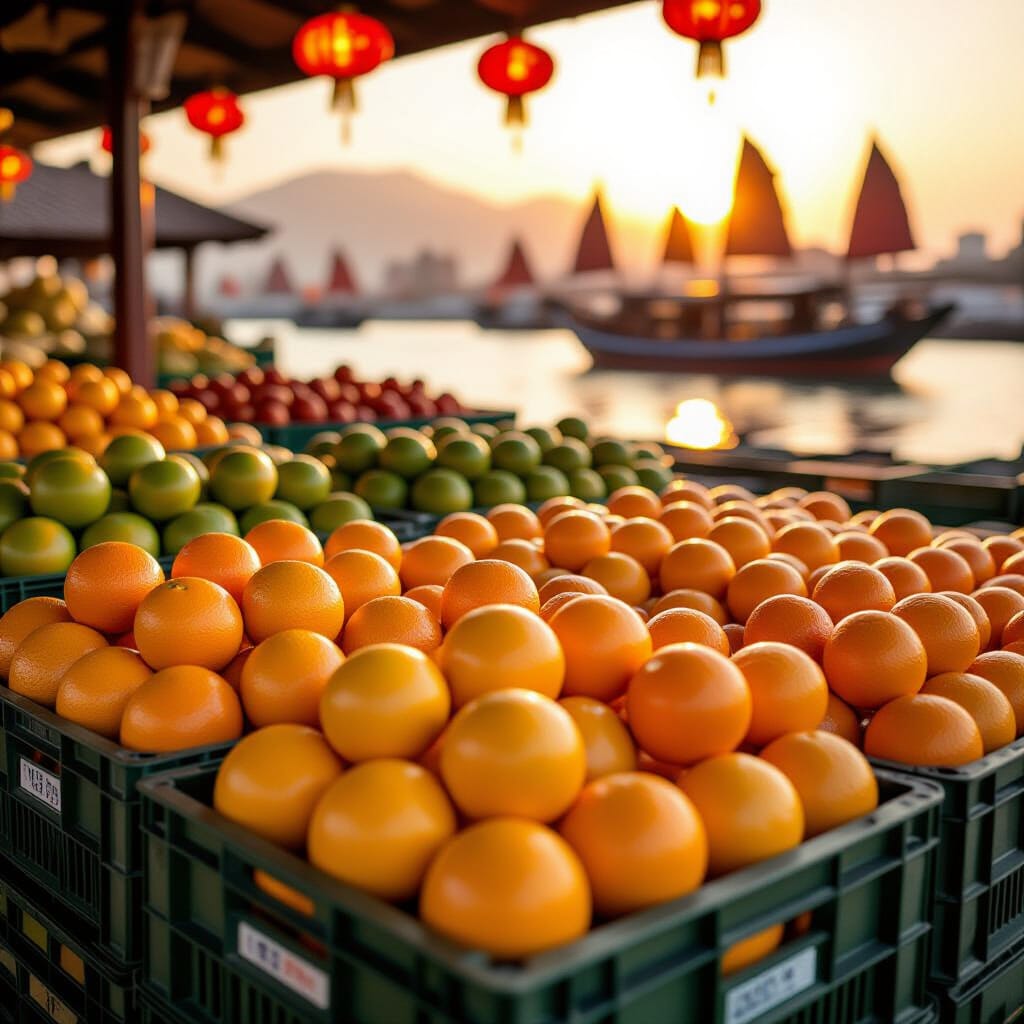

Pretoria — South Africa has strengthened its trade relationship with China through a new agreement aimed at expanding the export of fresh fruit, particularly citrus, avocados, and table grapes. The deal is expected to open additional market channels for South African farmers and boost the country’s agricultural earnings in the coming seasons.
Signed during a bilateral trade forum held in Beijing, the agreement underscores both nations’ commitment to deepen economic cooperation under the Forum on China–Africa Cooperation (FOCAC) framework.
“This partnership represents a win for South Africa’s farmers and a step forward for our agricultural diplomacy,” said Minister of Agriculture, Land Reform and Rural Development, Thoko Didiza. “We are ensuring that small and emerging farmers also benefit from global access.”
A Growing Appetite for African Produce
China is already one of South Africa’s largest trading partners, with bilateral trade exceeding $55 billion annually. The country’s growing demand for high-quality fruit presents a lucrative opportunity for South African producers, whose export sectors have gained recognition for their quality and traceability standards.
Under the new agreement, Chinese importers will gain streamlined access to South African fruit, while producers will benefit from reduced tariffs and simplified export certification processes.
Industry leaders say this could increase fruit exports by up to 30% within the next two years, particularly for citrus and avocados, which are among South Africa’s most competitive export products.
Supporting Farmers and Rural Development
South Africa’s fruit industry employs more than 300,000 people, many from rural areas. Government officials have emphasized that the benefits of the new deal must flow beyond large exporters to include cooperatives, emerging farmers, and community-owned farms.
“Trade must translate to transformation,” said Dr. Sipho Mahlangu, a rural development economist. “This deal can empower farmers in Limpopo, Eastern Cape, and Mpumalanga to scale up production, provided they get the right logistical and financial support.”
The Department of Agriculture has confirmed new funding initiatives to help farmers meet export requirements, including cold chain infrastructure, quality certification, and training on export logistics.
Diplomatic and Economic Significance
The agreement is also part of South Africa’s broader trade diversification strategy, reducing reliance on Western markets and strengthening South–South cooperation. China, in turn, has framed the deal as part of its commitment to balanced trade with Africa — purchasing more African goods to correct long-standing trade imbalances.
“China’s import expansion from Africa represents mutual prosperity,” said Ambassador Chen Xiaodong, China’s envoy to South Africa. “This partnership contributes to food security, job creation, and climate resilience.”
Economists note that the deal could help South Africa offset economic slowdowns in other sectors by expanding agricultural exports, a key driver of non-mineral growth.
Logistics and Sustainability
Ensuring that South African fruit reaches Chinese markets in optimal condition will require enhanced logistics coordination. Ports such as Cape Town and Durban are being upgraded to handle greater export volumes, with investments in cold storage and shipping capacity.
In parallel, both countries have committed to ensuring sustainability standards, emphasizing reduced pesticide use and environmentally conscious farming.
“African agriculture can grow without harming the planet,” said Lerato Mokoena, an agricultural sustainability expert. “This partnership shows how trade and environmental care can coexist.”
Looking Ahead
The first shipments under the new trade deal are expected to leave South Africa before the end of the year, marking the beginning of a new phase in Africa–Asia agricultural trade. Officials hope this success can pave the way for similar agreements across the continent, as African economies push toward value-added exports and agro-industrial development.
“This is about more than fruit,” said Minister Didiza. “It’s about African resilience, innovation, and our rightful place in global trade.”
With this expansion, South Africa reaffirms its position as a leading agricultural exporter and trade partner on the continent — balancing economic ambition with social equity and sustainability.