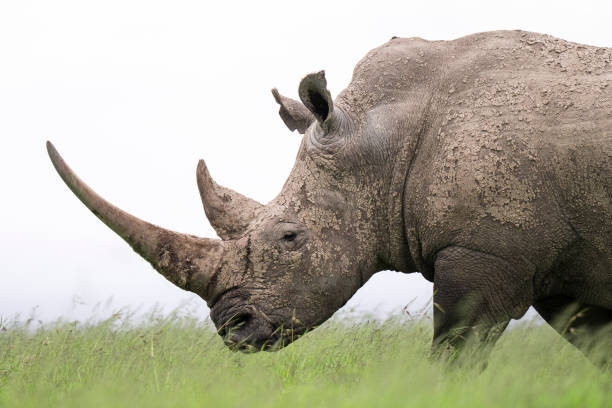

Kruger National Park, South Africa – July 2025
In a groundbreaking anti-poaching initiative, South African scientists are now injecting trace amounts of radioactive isotopes into rhino horns, making them detectable by border scanners and useless on the black market.
The project, dubbed Rhino Radioactive, is spearheaded by researchers from the University of the Witwatersrand in partnership with wildlife rangers, nuclear physicists, and conservation NGOs.
“Our goal is to make rhino horns not only traceable but also worthless to traffickers,” said Professor James Larkin, who leads the project. “By introducing harmless but detectable radioisotopes, we can flag horns in transit without harming the animals or the environment.”
The technique involves sedating rhinos and carefully infusing their horns with minute, non-toxic radioactive elements, which remain safely embedded in the keratin.
The horns, once treated, become detectable by radiation scanners at ports and airports, drastically increasing the risk of seizure and arrest for smugglers.
South Africa is home to around 80% of the world’s rhino population, but has lost over 10,000 rhinos to poaching in the past decade.
Rhino horn is trafficked mainly to Asia, where it is falsely believed to have medicinal properties or is used as a luxury status symbol. Despite international bans, the black market trade remains lucrative and violent.
Conservationists have long struggled with traditional deterrents — including dehorning, military patrols, and tech surveillance — but poaching syndicates often stay one step ahead.
“This is a game-changer,” said Zanele Mthembu, an anti-poaching unit commander in Limpopo. “If the horn is radioactive, it can’t move undetected. That changes the economics of the trade.”
However, the move has not been without criticism. Some animal rights groups have raised concerns about long-term impacts on rhino health, while others worry the technique might simply shift trafficking routes.
The government has emphasized that all procedures meet international safety standards and that extensive veterinary studies are being conducted.
The project is currently in pilot phase, with plans to expand across major conservation areas like Kruger National Park and Hluhluwe-iMfolozi.
With poachers constantly adapting, South Africa’s scientists and rangers hope that this radioactive twist may finally give rhinos a fighting chance.