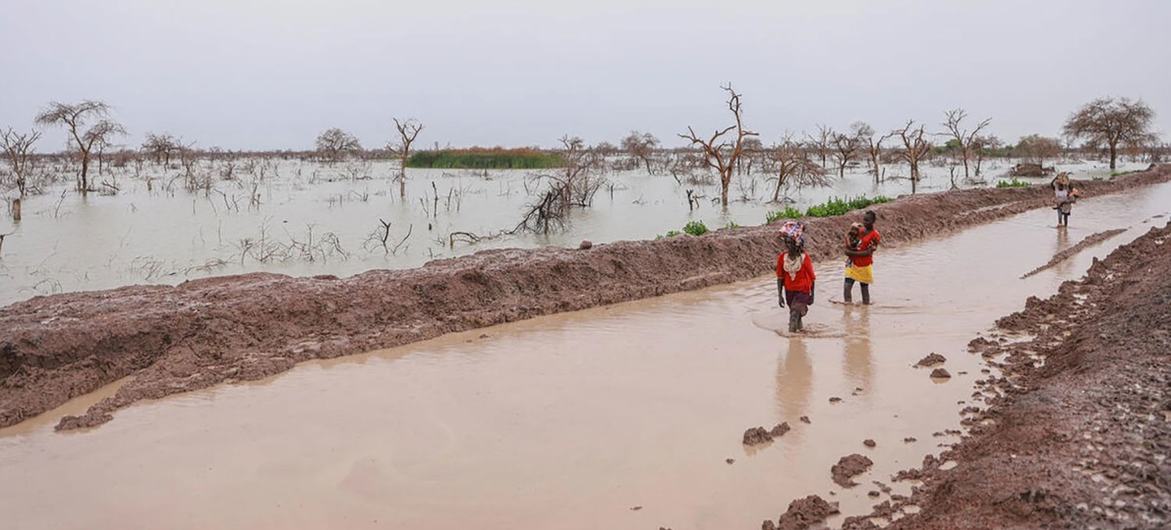

Juba, South Sudan — The 2025 floods in South Sudan have forced more than 100,000 people from their homes, creating one of the country’s largest humanitarian crises in recent years. Weeks of torrential rainfall have left villages submerged, farmland destroyed, and entire communities displaced.
Officials and humanitarian groups warn that the South Sudan floods 2025 could worsen food insecurity as crops are washed away and livestock perish. Families are seeking shelter in overcrowded schools and makeshift camps, while access to clean water remains scarce.
The United Nations Office for the Coordination of Humanitarian Affairs (OCHA) said relief operations are being hindered by damaged infrastructure and inaccessible areas. Aid workers have also raised alarms about the spread of waterborne diseases such as cholera, which thrive in flood-hit regions.
South Sudan is already grappling with poverty, conflict, and displacement. Analysts say the climate crisis in Africa is driving extreme weather patterns that disproportionately affect fragile states. Humanitarian agencies are urging international donors to increase funding for emergency relief and long-term climate adaptation.
“These floods are not just a natural disaster — they are a reminder of how climate change is hitting Africa’s most vulnerable communities first and hardest,” said a local aid coordinator in Juba.
If the rains continue, the displacement crisis in South Sudan could push already stretched resources beyond breaking point.