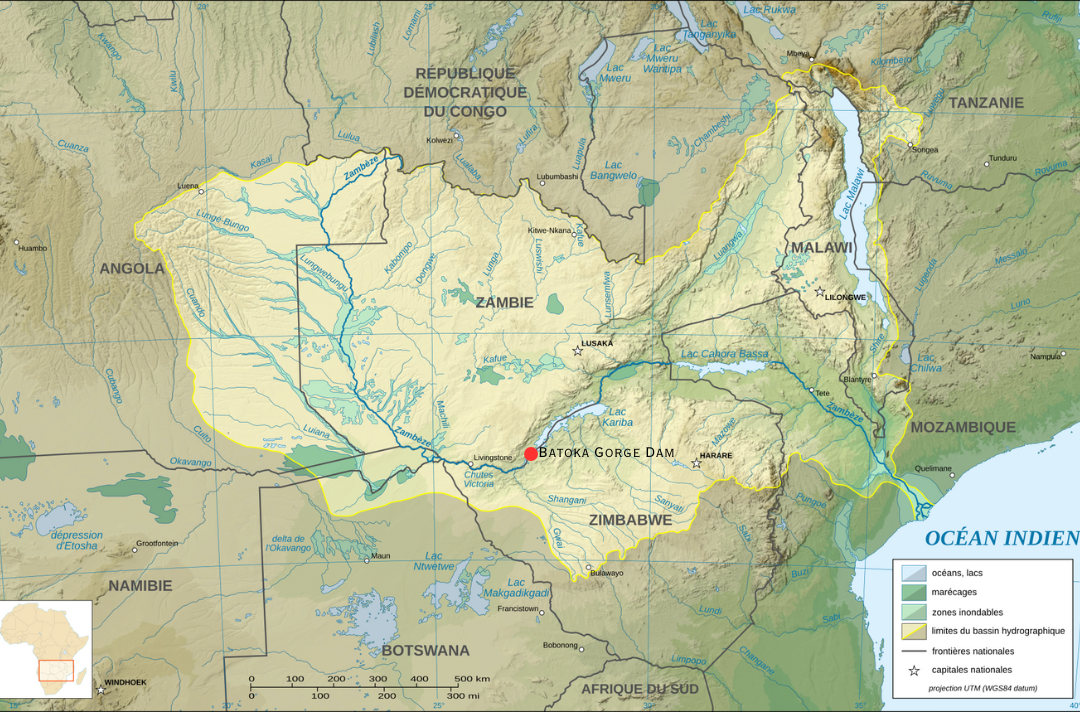

Zambia and Zimbabwe have jointly committed $440 million to advance the long-delayed Batoka Gorge hydroelectric project, marking a renewed push to unlock one of Southern Africa’s most ambitious energy developments.
The funding pledge, confirmed following late-2025 deliberations by the Zambezi River Authority (ZRA), represents seed capital intended to de-risk the project and attract private developers under a Public-Private Partnership (PPP) model. The total estimated cost of Batoka Gorge is currently placed at approximately $4.2 billion, according to recent regional assessments.
A Strategic but Cautious Step Forward
Officials stress that the latest commitment does not signal the immediate start of construction. Instead, it marks a revival and recommitment phase, aimed at accelerating preparatory work, updating feasibility studies, and improving investor confidence after years of delays.
The project remains in pre-construction, with technical consultants continuing work on updated environmental, hydrological, and financial assessments. Engineering firm AFRY is among those involved in reviewing earlier studies, as both governments seek to align the project with current economic and climate realities.
Power Ambitions on the Zambezi
Planned for the Zambezi River, downstream of Victoria Falls, Batoka Gorge is designed as a binational hydropower facility that would generate 2,400 megawatts (MW) of electricity—split evenly between Zambia and Zimbabwe.
If completed, Batoka would become one of the largest power stations in Southern Africa, feeding electricity into the Southern African Power Pool (SAPP) and potentially easing chronic shortages that have led to load-shedding across the region.
Financing Model Under the Spotlight
The $440 million commitment—roughly 10% of the projected total cost—is intended to catalyze the remaining funding through private investment, development finance institutions, and export credit agencies.
Energy economists note that the PPP structure is critical, given fiscal constraints in both countries. However, the model also places a premium on transparent governance, regulatory clarity, and political cooperation, areas where past infrastructure projects in the region have struggled.
Climate and Environmental Concerns Resurface
While Zambian and Zimbabwean authorities have reiterated their commitment to environmental safeguards, Batoka Gorge continues to face heightened scrutiny from climate scientists and environmental groups.
Recent studies, including academic research from institutions such as the University of Edinburgh, have warned that climate variability, declining rainfall, and more frequent El Niño events could reduce long-term water flows in the Zambezi Basin—potentially undermining hydropower output projections.
Critics argue that governments may be underestimating these risks, urging greater integration of climate resilience measures into project design and financial modeling.
Regional Energy Stakes
Despite the uncertainties, regional policymakers view Batoka Gorge as strategically important. Southern Africa’s electricity demand continues to grow, driven by mining, urbanization, and industrial expansion, while existing hydropower facilities—such as Kariba—have been strained by drought conditions.
For Zambia and Zimbabwe, the project represents both a power-security strategy and a test of regional cooperation in managing shared natural resources.
What Comes Next
No firm construction timeline has been announced. Progress will depend on the completion of updated studies, investor appetite, and sustained political alignment between Lusaka and Harare.
For now, the $440 million injection signals renewed intent rather than guaranteed delivery—placing Batoka Gorge once again at the center of Southern Africa’s energy debate.